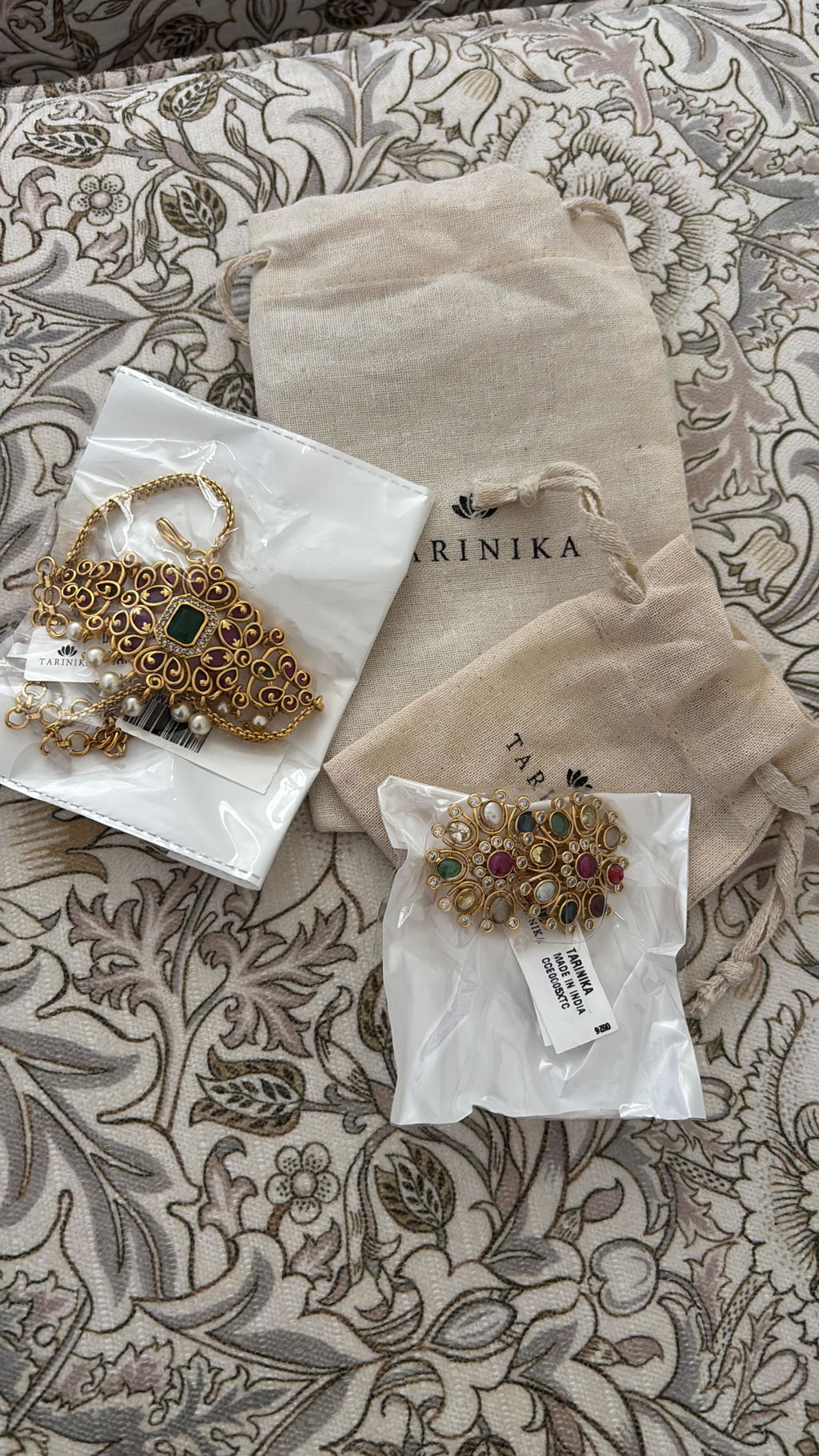

Temple earrings and traditional jhumkas both bring a beautiful Indian touch to ethnic outfits, but they create different looks. Temple earrings feature intricate motifs inspired by deities, peacocks, and traditional temple art, while jhumkas stand out with their bell-shaped design. Choose temple earrings for a rich, heritage-inspired look and jhumkas for versatile festive styling.
What Is the Difference Between Temple Earrings and Traditional Jhumkas?
Temple earrings draw inspiration from South Indian temple architecture, religious art, and traditional craftsmanship. Many designs feature Lakshmi, Ganesha, peacocks, or floral patterns. Their detailed designs make them a natural choice for silk sarees, bridal outfits, and festive occasions.
Traditional jhumkas feature a rounded or bell-shaped drop that hangs below the earlobe. Artisans create them in different sizes, finishes, and styles, from antique gold designs to Kundan-studded and pearl-adorned pieces. Their versatility makes them suitable for everything from family celebrations to wedding functions.
The main difference lies in their design. Temple earrings describe a style inspired by temple art, while jhumka refers primarily to an earring shape. Some temple earrings also feature a jhumka-shaped drop, so the two styles can overlap.
|
Feature |
Temple earrings |
Traditional jhumkas |
|
Design |
Deity motifs, peacocks, floral patterns, and temple-inspired details |
Bell-shaped drops, domes, beads, and decorative danglers |
|
Overall look |
Regal, traditional, and ornate |
Classic, graceful, and versatile |
|
Best outfits |
Kanjeevaram sarees, silk sarees, traditional lehengas |
Sarees, salwar suits, Anarkalis, kurtas, and lehengas |
|
Best occasions |
Weddings, religious ceremonies, festivals, and traditional celebrations |
Weddings, festivals, family functions, and everyday ethnic wear |
|
Styling approach |
Works well with heritage-inspired outfits and coordinated jewelry |
Works with both simple outfits and elaborate ethnic ensembles |
|
Design variety |
Temple-inspired studs, drops, chandbalis, and jhumka forms |
Small jhumkas, oversized bells, pearl jhumkas, and stone-studded styles |
When Should You Choose Temple Earrings?
Temple earrings work beautifully when you want your jewelry to reflect Indian heritage and traditional artistry. Their intricate motifs and antique finishes create a striking look without requiring several elaborate accessories.
1. For traditional weddings and bridal functions
Temple earrings complement bridal sarees, silk lehengas, and richly embroidered outfits. Gold-tone designs with Lakshmi motifs, peacocks, or floral detailing can reinforce the traditional feel of a bridal look.
You can pair statement temple earrings with a matching necklace for a coordinated appearance. Skip the heavy necklace and let your earrings stand out if you prefer a lighter look.
2. For silk sarees and South Indian outfits
Temple earrings pair naturally with Kanjeevaram sarees, traditional silk sarees, and pattu pavadai-inspired styling. Their detailed patterns echo the richness of these outfits.
Choose medium-sized temple earrings for daytime celebrations. Save larger, ornate designs for weddings, receptions, and evening festivities.
3. For religious ceremonies and festive occasions
Festivals such as Diwali, Navratri, and Dussehra offer wonderful opportunities to wear temple jewelry. These earrings complement traditional outfits while adding an unmistakably Indian touch.
Choose designs with subtle motifs if you prefer understated festive jewelry. Pick more elaborate pieces when your outfit has a simple neckline and minimal embellishment.
Pros and Cons of Temple Earrings
Pros
- Strong traditional appeal: Temple motifs complement heritage-inspired outfits.
- Distinctive detailing: Intricate patterns add character to simple sarees and lehengas.
- Statement-making style: Larger designs can become the focal point of your jewelry.
- Great for special occasions: They suit weddings, religious celebrations, and festive gatherings.
Cons
- Some designs feel heavy: Oversized earrings may cause discomfort during long events.
- Styling can feel specific: Elaborate temple motifs may not suit every contemporary or minimalist outfit.
- Detailed pieces need careful storage: Protruding motifs and stone settings can snag on other jewelry.
-
Some designs require extra care: Sweat, perfume, and moisture can affect decorative finishes over time.

When Should You Choose Traditional Jhumkas?
Traditional jhumkas offer more flexibility when you want one jewelry style that works across several outfits. Their bell-shaped silhouette brings movement and dimension to your look, while their wide range of designs makes them easy to dress up or down.
1. For everyday ethnic wear
Small or medium jhumkas work well with cotton kurtas, printed suits, straight-cut kurtas, and simple sarees. They add traditional charm without making your outfit look overly dressed up.
Choose lightweight jhumkas with a simple gold-tone finish for regular wear. Pearl details or small coloured stones can add interest without overpowering your outfit.
2. For festive outfits and family celebrations
Jhumkas complement Anarkalis, shararas, salwar suits, lehengas, and festive sarees. You can choose antique gold designs for a traditional look or stone-studded styles for a little extra sparkle.
For a family puja or daytime gathering, medium-sized jhumkas often provide the right balance. For a wedding reception or evening celebration, choose larger designs with pearls, Kundan details, or decorative chains.
3. For contemporary ethnic styling
Jhumkas can also complement Indo-Western outfits. Pair a simple pair with a long kurta and trousers, a contemporary co-ord set, or a plain saree with a modern blouse.
You do not need a matching necklace for every look. Jhumkas can provide enough detail on their own, especially when you wear a high neckline or an embellished outfit.
Pros and Cons of Traditional Jhumkas
Pros
- Versatile styling: Jhumkas work with many Indian outfits and some Indo-Western looks.
- Wide range of designs: You can choose tiny everyday styles or elaborate statement pieces.
- Easy outfit pairing: Simple jhumkas complement printed and heavily embroidered clothing.
- Options for different budgets: Material, craftsmanship, embellishments, and finish influence the price.
Cons
- Large styles can feel heavy: Oversized bell-shaped earrings may strain your earlobes.
- Some designs can look too casual or too ornate: The right size and finish depend on the occasion.
- Decorative details need care: Beads, pearls, and stone settings can catch on clothing.
- Not all designs suit every face shape: Width, length, and volume can change how the earrings frame your face.

Temple Earrings vs Traditional Jhumkas: Which Suits Your Outfit?
Your outfit, the occasion, and the overall look you want can help you make the right choice.
|
Outfit or occasion |
Better choice |
Why it works |
|
Kanjeevaram or pattu saree |
Temple earrings |
Their heritage-inspired details complement the saree's traditional look. |
|
Cotton kurta for daily wear |
Small jhumkas |
They add a subtle traditional touch without overwhelming a simple outfit. |
|
Bridal silk saree |
Temple earrings or ornate temple jhumkas |
Intricate motifs suit elaborate bridal styling. |
|
Anarkali suit |
Traditional jhumkas |
Their movement and shape complement the flowing silhouette. |
|
Simple festive kurta set |
Medium jhumkas |
They add definition without competing with the outfit. |
|
Embroidered lehenga |
Either style |
Choose temple earrings for a heritage look or stone-studded jhumkas for a softer, versatile finish. |
|
Indo-Western outfit |
Minimal jhumkas |
Their classic shape balances modern silhouettes. |
|
Diwali puja outfit |
Either style |
Temple earrings suit traditional silk looks, while jhumkas pair easily with suits and lehengas. |
Remember that these are styling suggestions, not strict rules. You can wear temple earrings with a contemporary outfit or pair jhumkas with a traditional silk saree. Choose the design that complements your outfit rather than following a fixed fashion formula.


Which Earrings Suit Your Face Shape Better?
Both temple earrings and jhumkas come in different shapes and sizes. Instead of choosing only by the style name, consider the length, width, and volume of the specific design.
Round face
Longer temple earrings and elongated jhumkas can add visual length to a round face. Choose drops that fall below the earlobe and avoid very wide designs if you prefer a more lengthened appearance.
Oval face
Oval faces generally work well with a wide variety of earring shapes. You can experiment with broad temple earrings, medium jhumkas, and elaborate bell-shaped designs.
Square face
Rounded jhumkas and temple earrings with curved edges can soften the angular appearance of a square face. Designs with rounded domes or gentle drops may feel more balanced than very geometric styles.
Heart-shaped face
Medium-sized jhumkas with a fuller lower section can help balance a narrower chin. Temple earrings with a rounded drop can create a similar effect.
Long face
Wider jhumkas and temple earrings with a broader silhouette can add visual width. Choose designs that create balance without adding too much length.
Styling tip: Face shape offers a helpful starting point, not a strict set of rules. Your hairstyle, neckline, personal taste, and the earring's actual dimensions also affect the final look.
How Should You Style Temple Earrings and Jhumkas Without Overdoing It?
The right styling approach helps your earrings complement your outfit instead of competing with it.
Let statement temple earrings take centre stage
Pair ornate temple earrings with a simple silk saree, a solid-colour kurta, or a lehenga with a relatively clean neckline. If your earrings already feature elaborate motifs, choose a simpler necklace or skip it altogether.
A sleek bun or half-up hairstyle can also highlight temple earrings, especially when you want the craftsmanship to stand out.
Match jhumkas to your outfit's level of detail
Choose simple jhumkas for printed kurtas and everyday ethnic outfits. Pick pearl-adorned, Kundan, or antique gold jhumkas for weddings and festive celebrations.
If your outfit features a heavily embroidered neckline, try medium-sized jhumkas instead of oversized statement pieces. This approach creates a balanced look.
Coordinate the finish, not every detail
Your earrings do not need to match every other accessory exactly. However, coordinating the dominant metal tone can help your look feel intentional.
For example, antique gold jhumkas can complement a warm gold-tone bangle, while pearl-accented temple earrings can work well with a delicate pearl accessory. You can mix finishes when the colours and overall styling feel cohesive.
Consider comfort before choosing statement designs
A beautiful pair of earrings should also feel comfortable. Check the weight, clasp, backing, and length before buying a pair for a long wedding or festival.
If your ears feel sore, switch to a lighter design. You can also save heavier statement earrings for shorter events and wear smaller styles for all-day celebrations.
Where Can You Wear Temple Earrings and Traditional Jhumkas?
Both styles work across several occasions, but each offers a different balance of detail and versatility.
- Weddings: Choose ornate temple earrings for a heritage-inspired bridal look or statement jhumkas for a versatile festive style.
- Diwali: Pair temple earrings with silk sarees and traditional lehengas. Choose jhumkas for suits, kurtas, and contemporary festive outfits.
- Navratri and Dussehra: Wear medium or lightweight jhumkas with Anarkalis, chaniya cholis, and traditional suits.
- Family pujas: Choose temple earrings for a traditional silk outfit or simple jhumkas for understated festive styling.
- Office and casual ethnic wear: Small jhumkas offer a practical option for kurtas and everyday Indian outfits.
- Receptions and evening events: Choose statement temple earrings or embellished jhumkas based on your outfit's neckline and level of detail.
Temple Earrings vs Traditional Jhumkas: The Final Verdict
Choose temple earrings when you want an ornate, heritage-inspired look that complements silk sarees, bridal wear, and traditional celebrations. Choose traditional jhumkas when you want greater flexibility across kurtas, Anarkalis, sarees, lehengas, and everyday ethnic outfits.
If you enjoy both styles, you do not need to pick just one. Keep a pair of detailed temple earrings for special occasions and a lightweight pair of jhumkas for more frequent wear. Together, they can cover a wide range of ethnic styling needs.
Explore Tarinika's earring collection to find designs that suit your outfits, occasions, and personal style.
Frequently Asked Questions
1. Are temple earrings and jhumkas the same?
Temple earrings refer to designs inspired by temple art, deities, and traditional motifs. Jhumkas refer to earrings with a bell-shaped or dome-shaped drop. Some temple earrings feature jhumka-style drops, so the categories can overlap.
2. Which is better for a silk saree, temple earrings or jhumkas?
Temple earrings often complement silk sarees because their traditional motifs suit the rich fabric and heritage-inspired styling. However, antique gold jhumkas also work beautifully with silk sarees. Choose based on your saree's embellishments, neckline, and the look you prefer.
3. Can I wear temple earrings with a salwar suit?
Yes. Temple earrings can add a traditional touch to a salwar suit, especially for weddings, pujas, and festivals. Choose medium-sized designs for a balanced look with simpler outfits.
4. Are traditional jhumkas suitable for everyday wear?
Yes. Small, lightweight jhumkas work well with kurtas, cotton suits, and casual ethnic outfits. Choose comfortable backings and durable finishes if you plan to wear them regularly.
5. Which earrings look better with a lehenga?
Both styles can complement a lehenga. Temple earrings suit heritage-inspired bridal and festive looks, while embellished jhumkas work well with many lehenga styles. Consider the neckline, embroidery, and other jewelry before making your choice.
6. Do temple earrings suit Western outfits?
Yes. You can pair simple temple-inspired earrings with a plain dress, a structured top, or an Indo-Western outfit. Choose less ornate designs if you want to balance traditional detailing with contemporary clothing.
7. Do gold-plated temple earrings or jhumkas tarnish?
Yes. Gold-plated fashion earrings can lose their finish or develop visible changes over time. Sweat, moisture, perfumes, friction, and storage conditions can speed up the process. Gentle cleaning and dry storage can help preserve their appearance.
8. How long do artificial temple earrings and jhumkas last?
Their lifespan can range from several months to several years, depending on the base material, plating quality, frequency of wear, and care. Well-maintained pieces may last longer, but no general estimate guarantees the lifespan of an individual pair.
9. Which earrings are better for a round face?
Longer, more elongated temple earrings and jhumkas can create a lengthening effect on a round face. However, you can wear any shape you enjoy. Consider the design's proportions and how it frames your face.
10. Can I wear temple earrings and a necklace together?
Yes. You can pair temple earrings with a matching temple necklace for weddings and traditional celebrations. If both pieces feature heavy detailing, consider a simpler necklace or smaller earrings to create a balanced look.
11. Are lightweight jhumkas available for long events?
Yes. Many jhumka designs use smaller domes, lightweight materials, or simplified embellishments. Check the product's weight and backing before purchasing, especially if you plan to wear the earrings for several hours.
12. How should I store temple earrings and jhumkas?
Wipe each pair with a soft, dry cloth after use. Store the earrings in separate pouches or compartments in a cool, dry place. Keep them away from moisture, direct sunlight, and perfumes to help protect the finish and decorative details.